
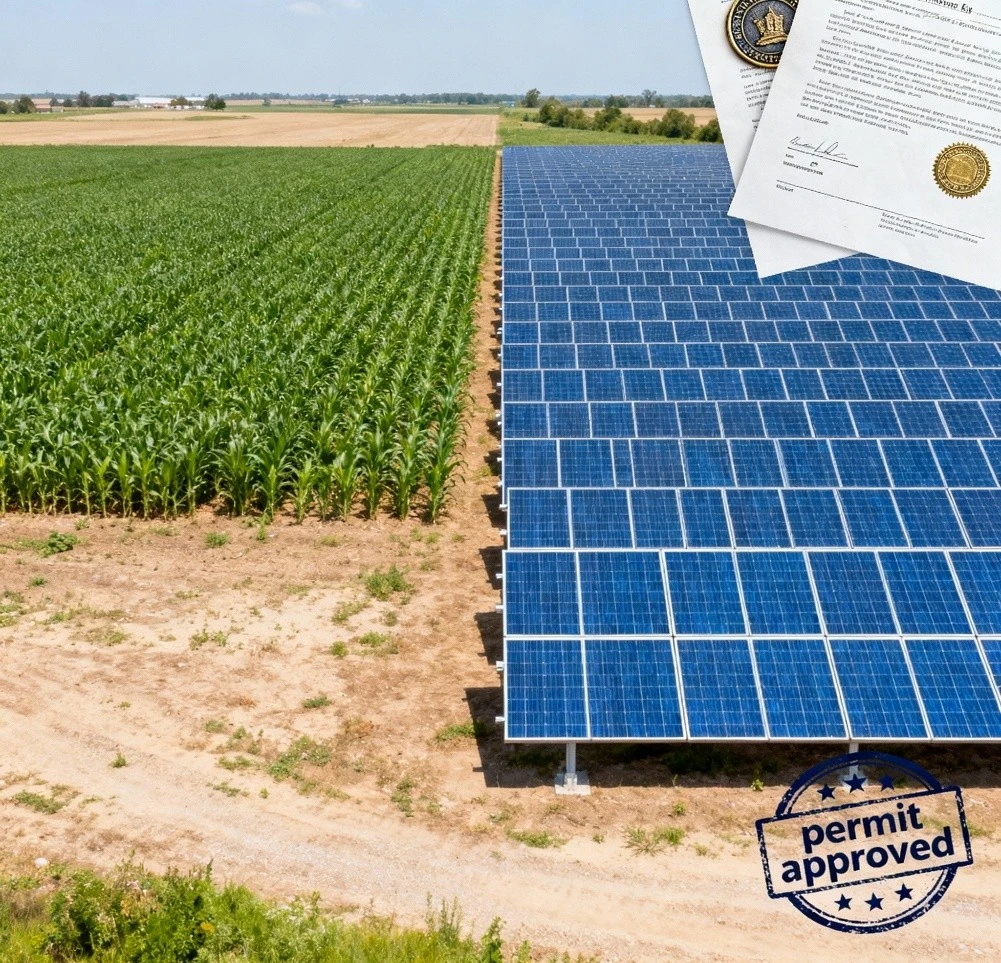
India, with its large population and a growing economy, requires renewable energy to meet its energy demands. As per official data, India occupies the fourth position in the renewable energy installed capacity (third position in solar power capacity). Further, given the geographical and climatic condition of majority of India, solar power as a form of renewable energy has a very high potential in addressing the electricity and power needs of India.
The State of Odisha has the capacity to generate 200 GW of solar energy.[1] However, as of June 30, 2025, it has an installed solar energy capacity of 706.34 Megawatt.[2] Hence, the State has ample scope for investment in solar energy projects. The International Forum for Environment, Sustainability and Technology (iFOREST) has also acknowledged the same and has identified the districts of Sundargarh, Angul, Balangir, Jharsuguda, Dhenkanal as having the highest potential to generate solar power.[3] However, it must be understood that large parcels of lands spread across several acres are required to establish solar power plants.
ODISHA RENEWABLE ENERGY POLICY, 2022
In view of the aforesaid facts and to promote the innovation and development in the renewable energy space, the Government of Odisha has rolled out various benefits through the Renewable Energy Policy, 2022[4] (“REP”) which will be in force till March 31, 2030. The policy is applicable to various renewable energy projects including solar projects and provides various benefits in relation to acquisition of land for such purposes. Some significant beneficial provisions are:
(i) Paragraph 11 of the REP 2022 expressly states that any agricultural land utilized for the construction of a grid-connected renewable energy project will be deemed to be converted for non-agricultural use at no cost. Furthermore, such agricultural land is considered to be used for non-agricultural purposes for the establishment of renewable energy projects and will be exempt from the application of the provisions, particularly the payment of premium levied under the provisions of Section 8A of the Orissa Land Reform Act, 1960 (“OLR Act”).
(ii) Paragraph 10(6) of the REP 2022 exempts the levying of stamp duty and registration charges for the purchase of land to be used for a renewable energy project.
(iii) Paragraph 11 of the REP 2022 exempts the application of a ceiling on land holdings under the OLR Act.
LAND ACQUISITION AND TITLE DUE DILIGENCE
Any company/individual interested in establishing a solar power plant in Odisha will be required to acquire private land for establishing the project. During acquisition, a thorough due diligence is required to be carried out in order to avoid litigation/losses later. We have discussed below, some of the significant documents that must be looked into during such title due diligence exercise.
Record of Rights: The Record of Rights as prepared under the Odisha Special Survey and Settlement Act, 2012 of the land should be reviewed in order to determine the present owners of the land and its area.
Encumbrance Certificate: The chain of ownership is verified with the help of the Encumbrance Certificate (EC) issued under Rule 123(1) of the Orissa Registration Rules, 1988. The EC helps in determining as to whether any illegality or discrepancy is present in the transfer from the original owners to the current owners.
Sale deed: It is also pertinent to refer to available sale deeds to confirm that they match with the information provided in the EC and both are indicating at the same ownership chain.
Legal Heir Certificate: Legal heir certificate helps in determining that who were the legal heirs on whom the property devolved. In the State of Odisha, it has been seen in many cases that the original owners are not able to provide their legal heir certificate, thereby affecting the proof of transfer of property and establishment of the chain of transfer. In such a case, various ancillary documents are reviewed to establish the flow of title.
Permitted Use of Land: It is pertinent to refer to the ‘Kisam’ or the type of land, to determine as to whether such land can be used for the purpose of establishing a solar project. Especially, now, when the process of rationalising the ‘Kisam’ of land is underway.
Renewable energy is seen as the future source of energy. Accordingly, the Government of Odisha has undertaken many land reforms and framed various policies to increase the generation of renewable energy, including by way of providing several land acquisition incentives. Further, as acquisition of land will be one of the most capital-intensive investments for such power plants, it is advisable to opt for a thorough land due diligence procedure and ensure that a proper flow of title is established.
References:
- Odisha has power to generate 200 GW solar energy’, The New Indian Express, December 24, 2024, available at: https://www.newindianexpress.com/states/odisha/2024/Dec/24/odisha-has-power-to-generate-200-gw-solar-energy.
- Mr. Muzibulla Khan, Rajya Sabha, Unstarred Question No. 2705, answered by Mr. Shri Shripad Yesso Naik, Ministry of New and Renewable Energy, Government of India, August 12, 2025, available at: https://sansad.in/getFile/annex/268/AU2705_svBO5h.pdf?source=pqars.
- iForest, Renewable Energy Potential in Odisha, February 09, 2023, available at: https://iforest.global/event/renewable-energy-potential-in-odisha/.
- Odisha Renewable Energy Policy, 2022, Energy Department, Government of Odisha, November 30, 2022, available at: https://energy.odisha.gov.in/sites/default/files/2022-12/3354-Energy%20dept._1.pdf
For any queries or discussions, you can reach out to our contributors:
Arpit Sarangi (arpit.s@asqlegal.com)
Akash Kumar (akash@asqlegal.com)